This December: Quiet Times
Updated: Mar 2

Winter is a season for hibernation and introspection, so in December we’re focusing on children’s book creators whose work gives us a feeling of quietude.
Though their storytelling may seem to focus on ordinary occurrences, Taro Yashima, Kazue Mizumura, Arnold Lobel, and Jon J Muth’s books are thought-provoking, poetic, and resonate deeply with readers of all ages.
Join us this month for Story Hours (ages 3-7) and our adults-only Let’s Take a Dive program to learn more about these creators and celebrate their inspiring work.
Taro Yashima (1908-1994)

Taro Yashima was born Jun Atsushi Iwamatsu in Nejima, Kimotsuki District, Kagoshima, and raised in a small village on the southern coast of Kyushu, Japan. His father, who was a doctor and art collector, encouraged Yashima’s artistic talents. He studied for three years at the Imperial Art Academy in Tokyo. As a pacifist, he refused to take part in the school’s required military drills and was expelled.
He married fellow artist Tamoe Sasako (who later adopted the pen name Mitsu Yashima) in 1930. The couple worked together in political organizing and creating work that critiqued Japan’s militarism. They were both imprisoned and brutalized by the Japanese government in retaliation for their activism.
In 1939, on the pretext of visiting the San Francisco World’s Fair and writing about life in America, they went to the United States, leaving their five-year-old young son, Mako, with his grandparents. They attended the Art Students' League in New York City from 1939 to 1941.
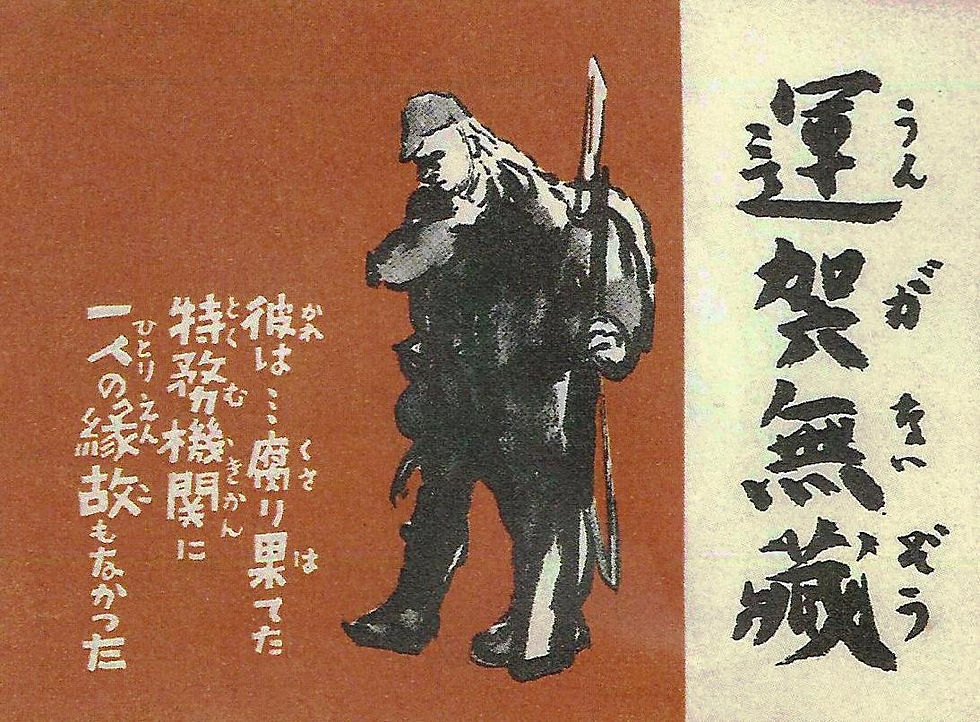
After the attack on Pearl Harbor, Yashima enlisted in the U.S. Army, and was employed as an artist by the United States Office of War Information and in the Office of Strategic Services. It was then that he adopted the pen name Taro Yashima to protect his family still living in Japan against possible retaliation by the Japanese government. The name was a symbol of homesickness for him. He once explained, “Taro means fat boy, healthy boy; yashima means right islands, old Japan, and peaceful Japan.”
At the conclusion of World War II, the Yashimas were both granted permanent U.S. citizenship. They were reunited with their son Mako in 1949, shortly after the birth of their daughter Momo.
After the war, the Yashimas pursued writing and art, including helping to found the Japanese-American Artists Group. Before he created books for children, Yashima wrote two autobiographical picture books for adults: The New Sun (1943) and Horizon is Calling (1947).
Decades of hardship had taken their toll, and Yashima battled stomach ulcers for several years, spending a lot of time at home with his daughter Momo. She asked her father about his childhood in Japan. From those memories he created his first children’s book, The Village Tree, which was published in 1953.
In 1954 the family moved to Los Angeles California. They opened the Yashima Art Institute, where they both taught, and co-authored Plenty to Watch (1954) and Momo’s Kitten (1961).
Yashima’s Crow Boy (1955), Umbrella (1958), and Seashore Story (1967) are Caldecott Honor Books. In 1974, he received the University of Southern Mississippi's Silver Medallion, a prize recognizing outstanding contribution to children's literature.
Reflecting on creating books for children, Yashima wrote in the early 1960s, “I believe that one should be able to contribute his best for the growth of the younger generation as long as one lives as a human being. I would like to continue publishing picture books for children until my life ends. The theme for all those should be, needless to say, ‘Let children enjoy living on this earth, let children be strong enough not to be beaten or twisted by evil on this earth.’”
Before his death in 1994, Yashima created more than a dozen colorful, delicate, and poetic picture books. During an era when Japanese people were largely stereotyped, Yashima’s work celebrated the universality of the human experience.
Yashima’s book, Crow Boy, can be experienced at The Rabbit hOle. In this space, visitors can experience a moment of reprieve from the surrounding museum hubbub, and consider the themes of isolation, yearning, and day dreaming that are present throughout the book.

Kazue Mizumura (1920-1996)

Kazue Mizumura was born in Kamakura, Japan, in 1920 as the youngest of five children. Her father was a baron and aristocrat, and he relocated the family to Dairen, Manchuria (now Dalian, China), for his post there. The family returned to Japan in the early 1930s, and Mizumura completed her schooling at an elite institution for the children of aristocracy that was founded by Emperor Meiji. She then attended the Art Institute in Tokyo, graduating in 1942.
Her life was upended by World War II. Because there were no books to be bought, she made a picture book for her daughter. She recalled, “That was the only book she ever had for the three years of her life.” Mizumura lost both her daughter and husband during the war.

To support herself, she worked in Tokyo, selling scarves and cards and teaching calligraphy to members of the American occupation forces — one of whom paid her passage to the United States in 1955. She won a two-year scholarship to attend Pratt University in Brooklyn. To make a living she worked on textile design, upscale Japanese restaurant décor, jewelry, ceramics, and book illustration.
One of her early illustration jobs was for a cookbook by Irma Walker Ross, called Recipes from the East, which aimed to make a variety of Asian dishes accessible to American housewives.
Her first illustrated book for young people was The Cheerful Heart (1959), a novel about a young girl Tomi and her family who must rebuild their lives in bombed Tokyo after the war.
The next year, Mizumura published her first picture book, A Pair of Red Clogs (1960), written by Masako Matsuno. Many of her early books featured Japanese themes and characters, including several books of folk tales created with her husband Claus Stamm.
While her children’s book career began to flourish, Mizumura had a second baby daughter in the U.S. who tragically died in infancy, and her marriage to Stamm ended in divorce.
In 1963, she bought a house in Stamford, Connecticut, where she drew inspiration from the surrounding natural world to create her own stories and poetry. Feeling limited artistically by illustrating works with Japanese themes, an editor encouraged her to write her own books.
“I like to work with different mediums. And I do believe the mediums should differ according to the theme of the text. In illustrating my own books, I hope that I can develop my technique and style without restraint.”

The first books she both wrote and illustrated were I See the Winds (1966) and If I Were A Mother (1967), which the New York Times recognized as one of the most outstanding picture books of 1968.
She illustrated more than a dozen nonfiction books about nature and different animals including, opossums, Emperor Penguins, jellyfish, and more.
Before her passing in 1996, Mizumura would create at least 50 books for children.
At The Rabbit hOle, Mizumura is honored in an exhibit wall featuring motifs from Flower Moon Snow: A Book of Haiku, which she wrote and illustrated using woodblock prints.
Arnold Lobel (1933-1987)
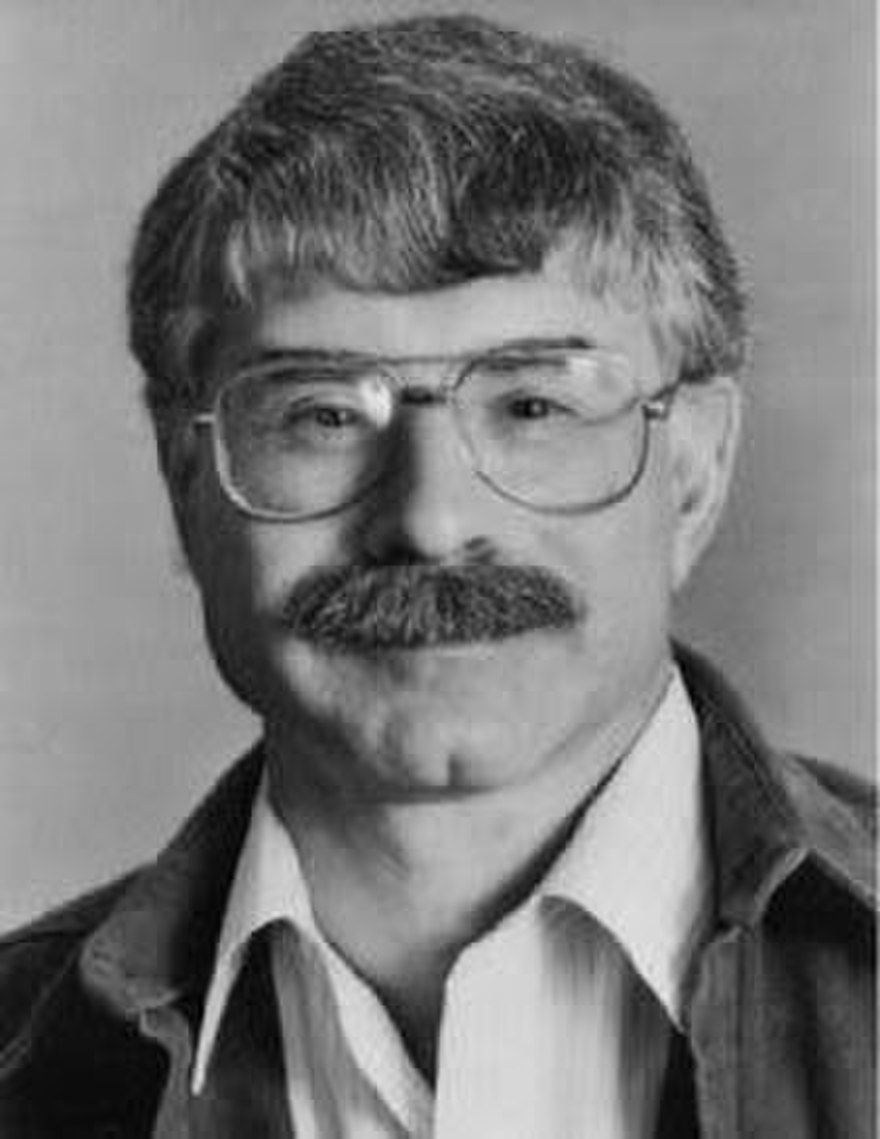
Arnold Lobel wrote and illustrated 28 of his own books and illustrated over 70 children’s books for other authors. Lobel was the recipient of a Caldecott Honor in 1971 and ‘72 for Frog and Toad are Friends and Hildilid’s Night (written by Cheli Durán Ryan), respectively. In 1981 he won a Caldecott Medal for Fables, which he wrote and illustrated.
Lobel was a quiet child who was often bullied and found refuge in his local library. He turned to illustration as his regular pastime after a year-long illness in second grade left him feeling disconnected and isolated. He attended Pratt Institute in Brooklyn to study illustration, and after graduating, worked in advertising before he could establish a living as an illustrator.
In 1955, he married fellow Pratt graduate Anita Kempler, with whom he had two children. Anita was a children’s book creator herself, and she won a Caldecott Honor for her 1982 book On Market Street, which was written by Lobel.
From 1958-1960, Lobel’s earliest children’s books were published by KTAV Publishing, which focuses on Jewish educational texts.

After illustrating several books for other authors at Harper, Lobel wrote and illustrated A Zoo for Mister Muster (1962). At the time, he and Anita lived in Brooklyn, across the street from the Park Zoo, where they would take their children.
Lobel’s first big break came in 1970 with the publication of Frog and Toad Are Friends. It was immediately beloved and a welcome break from the otherwise didactic early reading books of the era. He wrote three more Frog and Toad books including Frog and Toad Together (1972), Frog and Toad All Year (1976), and Days With Frog and Toad (1979).
Using subtle humor and inviting illustrations, Lobel wanted his books to provide children the love, acceptance, and friendship that he struggled to find as a child.
“When you write about children, you usually wind up writing about a certain kind of child. I think it's unavoidable. You either write about poor children, the ghetto. Or you write about middle-class children,” said Lobel. “But by using animals, by pulling it away from everybody, everything, you bring it to everybody. I mean, Frog and Toad belong to no one but they belong to everyone, every sector: rich children, poor children, white children, black children. Everybody can relate to Frog and Toad because they don't exist in this world.”
Lobel also once said that Frog and Toad, “are really two aspects of myself.” Toad is serious and pessimistic while Frog is cheerful and easy going.
In the early ‘80s, Arnold and Anita separated, and Arnold lived the duration of his life with his partner, Howard Weiner. Lobel suffered from AIDS for many years and he died in 1987 from cardiac arrest. He was just 54. His work has been translated into dozens of languages, and many of his characters — including Frog and Toad — are recognizable across generations.
At The Rabbit hOle visitors can peek inside Frog and Toad’s small homes, and feel small like Frog and Toad under the enormous flora that surround the exhibit.

Jon J Muth (1960- )

Jon J Muth is an author and illustrator of comic books, graphic novels, and children’s books. His distinctively soft and moody watercolor style plays with opposing themes in light, line, and form.
He authored and illustrated many comic books and graphic novels throughout the 80s, including the groundbreaking series Moonshadow written J.M. DeMatteis. In 1995, he earned an Eisner Award, one of highest honors in the comics industry, for his illustrations for The Mystery Play (1994, written by Grant Morrison).
Muth became more interested in children’s literature after he became a father. After his son was born, he developed a comic book inspired by his experiences as a new dad and brought his illustrations to Scholastic Press, hoping to turn them into a children’s book. Scholastic instead invited him to illustrate a manuscript from Newbery Award winner Karen Hesse. Come On, Rain (1999) is the story of a young girl celebrating a summer rainstorm, and it earned Muth a Gold Medal from the Society of Illustrators.
His first solo authored and illustrated book, The Three Questions (2002) is a retelling of the classic short story by Leo Tolstoy. Many of Muth’s children’s books explore themes of meditation, philosophy, and curiosity. His book Zen Shorts, which will be featured in a future exhibit at The Rabbit hOle, is the first in a series that follows the whimsical goings on of a giant panda named Stillwater.
Originally from Cincinnati, Ohio, Muth’s mother was an art teacher who encouraged him to paint and draw. Because both of his parents were teachers, Muth says that his great-grandmother was essential in his upbringing. When he was college-aged, he did not pursue a formal education in the arts, although he has studied painting, printmaking, and drawing in Europe and studied stone sculpture and calligraphy in Japan.
Reflecting on how he came to create children’s books, Muth told IndieBound, “A sense of joy is what moved me from comics to picture books. My work in children's books grew out of a desire to explore what I was feeling as a new father. Children take things very seriously. Their job is trying to figure out how to be in the world, how it all works. At the same time they prize nonsense, as I do, so we're a good match.”
“Working in children's books has been the most fulfilling. When editors or writers making books for children show me a story it's like they are asking, ‘have you ever been here or felt this?’ It's a sacred invitation. I take it way too seriously.”
The Rabbit hOle’s fabrication team is currently building a 16-foot Stillwater. Visitors will be able to climb onto the giant soft panda and watch the stories from Zen Shorts unfold around them.